Why Sustainable Procurement is Your Brand’s Best Look

Choosing eco-friendly products has shifted from “nice-to-have” to “must-have”. For busy marketing managers and business leaders, the challenge is not just about finding the right price; it is about ensuring your branded gear reflects the values of your customers. 

At CostSmart, we think of ourselves as an extension of your team. We know you are juggling a million tasks, and while you want to make ethical choices, you do not always have the time to vet every single supplier. That is where we come in. We handle the sustainable procurement and logistics of these products, so you can focus on the big picture while we make your sustainable goals a reality. 


Making a Real Impact Without the Stress 

Sustainable procurement is a brilliant way to future-proof your brand. By choosing eco-friendly products, you are not just helping the planet; you are building a story that people want to be part of. 

The best part is that professional supply chain management means you do not have to choose between “green” and “great quality”. We specialise in finding items that last. A high-quality, sustainable gift that stays on a client’s desk for years is much better for your budget and the earth than a cheap plastic gadget that breaks in a week. 


Eco-Friendly Favourites: What’s Trending? 

Sustainable products have evolved far beyond the basics. There are now incredibly innovative ways to showcase your brand. Here are a few eco-friendly items we are currently loving.


Recycled Luggage and Lifestyle Gear

 Move over, virgin plastics. We can source a full range of high-quality suitcases, cooler bags, duffels, and laptop sleeves made from recycled materials. These pieces are durable, stylish, and prove that recycled fabrics can handle the rigours of national travel. 


A four-panel display of durable travel gear made from recycled materials, featuring a black laptop sleeve held by a person, a navy duffel bag, a navy roll-top backpack leaning against a wooden chair, and a black hardshell carry-on suitcase with an open front compartment. Advertised by CostSmart.
(From left to right) Recycled Roll-Top 18L Backpack – Elleven Recycled 16″ Laptop Sleeve – Recycled Canvas Duffle 48L – Rover Pro Recycled Cabin Trolley 40L. CONTACT US FOR PRICING!


The Natura Collection

For those who love a natural aesthetic, the Natura range offers a stunning variety of products crafted from sustainable materials like wood, cork, and bamboo. It is the perfect way to bring an organic, earthy feel to your corporate gifting. 


A four-panel collage showcasing eco-friendly branded lifestyle products from the Natura range, including a stainless steel lunch box with a bamboo lid, a wooden "Connect Four" style game, a bamboo pedicure tool, and a speckled desk caddy with a cork note board. It is advertised by CostSmart.
(From left to right) NATURA Stainless Steel Lunch Box – NATURA Quattro Wooden Four-in-a-Row Game – NATURA Pedicure Tool – NATURA Oaken Wireless Charger Desk Caddy. CONTACT US FOR PRICING!


The Ocean Bottle Brew Flask

 This is not just a flask; it is a statement. With every purchase of an Ocean Bottle, you become a global change-maker. Each sale funds the collection of 11.4kg of ocean-bound plastic (equivalent to 1,000 plastic bottles). It is a tangible, significant contribution to cleaning our oceans. Vacuum insulated (6 hours hot, 18 hours cold). Branding: Pad print or Laser Engraving.


A sleek, matte black Ocean Bottle Brew Flask with its lid hovering above the stainless steel rim. Advertised by CostSmart.
Ocean Bottle Brew Flask 350ml. CONTACT US FOR PRICING!


The Bamboo Candle

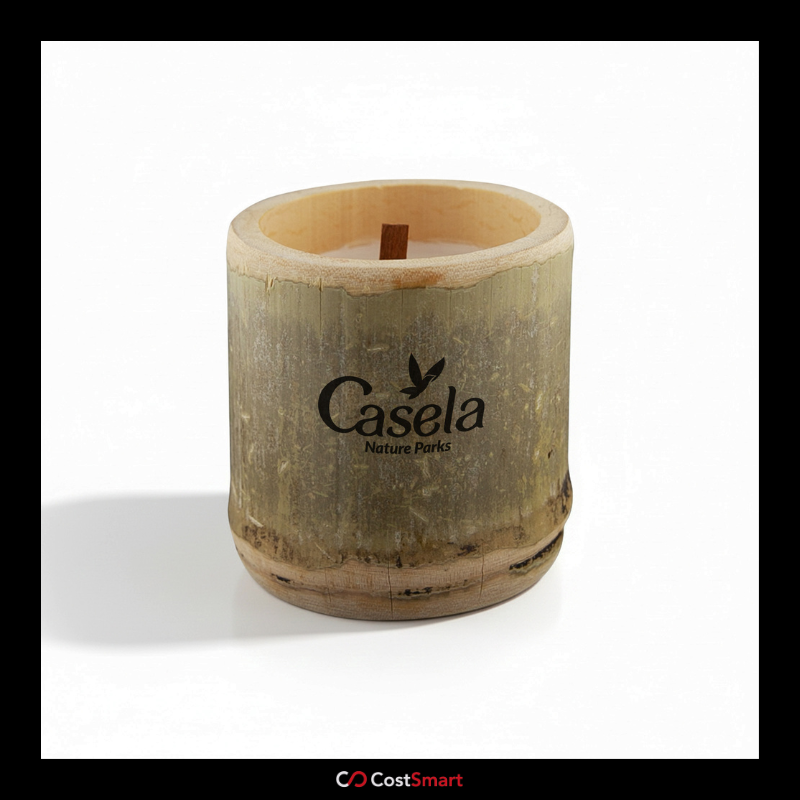
Bring warmth and nature into any space. Featuring a natural bamboo exterior with a unique grain, these candles are made from a sustainable blend of soybean and beeswax. With a creamy vanilla aroma, they are an eco-conscious and elegant addition to any home or office. Branding: Pad Print & Digital Crystal Label.


A sustainable vanilla-scented candle housed in a natural, uniquely grained bamboo. he candle uses a soybean and beeswax blend with a wooden wick. It is advertised by CostSmart.
Bamboo Candle. CONTACT US FOR PRICING!


Let Us Do the Heavy Lifting 

Trying to manage sustainable sourcing on your own can be a headache. You have to check certifications, manage multiple vendors, and keep an eye on delivery times to ensure your “green” choice does not come with a giant carbon footprint from inefficient shipping. 

CostSmart takes that weight off your shoulders. We manage everything from the first design idea and ethical sourcing to storage and delivery. Because we manage your non-core products on a national scale, we can streamline the process, cutting down on extra shipments and reducing your overall environmental impact. 

You imagine it, and we make it happen. It is that simple. 


Let’s Chat About Your Next Project 

Sustainability is the way forward, and we are here to help you lead the charge. Whether you are looking to refresh your executive travel gear or want fresh, eco-friendly ideas for your next big event, we have got you covered. 


Ready to make your brand a little greener? 

Contact the CostSmart team today for a quote and let’s start planning your sustainable supply chain!

Sustainability & Digitisation: The Path to a Paperless Office

The transition toward a paperless office is driven by a dual necessity: the demand for greater operational speed and a growing commitment to environmental stewardship. While moving away from paper-based workflows is often viewed as a technical hurdle, it is increasingly becoming a core component of a responsible corporate strategy. 

Digitisation is more than a way to clear desk space. By treating records management as a strategic asset, organisations can bridge the gap between legacy paper archives and a more sustainable, high-performing digital future. 


The Environmental Imperative: Beyond the Recycle Bin 

Sustainability has moved from a corporate social responsibility footnote to a fundamental business imperative. Traditional paper-based systems carry a significant environmental footprint, encompassing everything from the natural resources required for production to the energy consumed during transport and physical storage. 

Transitioning to a digital-first environment provides immediate and measurable benefits: 

  • Reduction in Resource Consumption: Minimising paper use directly reduces the demand on forestry and the energy-intensive manufacturing processes associated with office consumables.
  • Lowered Carbon Footprint: By reducing the volume of physical documents that require climate-controlled storage and frequent road transport, businesses can significantly lower their carbon emissions. 
  • Waste Mitigation: Digitisation prevents thousands of kilograms of paper and obsolete hardware from ending up in landfill, aligning operations with circular economy principles. 


Why Digital Transformation is Time-Critical 

A common misconception is that legacy archives sitting in storage are “cost-neutral.” In reality, maintaining massive volumes of physical records without a digital strategy can be a silent drain on resources. Every year that an organisation delays its digital transition, the compliance debt grows. 

Legacy paper is susceptible to physical deterioration and, more importantly, it remains functionally invisible to the business. In an era where decisions are made based on data, information trapped in a box is information that cannot be leveraged. Furthermore, the risk of non-compliance increases as regulatory frameworks in Australia continue to shift towards digital reporting and electronic data exchange standards. 


Implementing a “Scan-on-Demand” Strategy 

Full-scale digitisation does not have to happen overnight. For many organisations, the most sustainable and cost-effective path is a hybrid approach. This involves maintaining a secure, professional archive for deep storage while utilising Scan-on-Demand services for active files. 

This methodology allows a team to: 

  • Prioritise High-Value Data: Focus digitisation efforts on the records that drive daily decision-making or carry the highest regulatory risk. 
  • Maintain Continuity: Access physical documents digitally within minutes through secure transfers, ensuring that the transition to paperless does not disrupt ongoing workflows. 
  • Audit and Purge: Use the transition as an opportunity to identify records that have reached their legal destruction date, further reducing the storage footprint and associated costs. 


The Natural Result of a Paperless Mindset 

When document storage is integrated into a broader business strategy, the removal of paper-based bottlenecks leads to immediate efficiency gains. Digital records are searchable, shareable, and secure. They enable remote collaboration and ensure that the “corporate memory” is protected against physical disasters such as fire or flood. 

By freeing internal staff from the manual labour of filing and retrieving paper, they are able to focus on higher-value tasks. The path to a paperless office is not just about adopting new software: it is about creating a more resilient, transparent, and environmentally responsible foundation for the future of the business.


Aligning Your Records Management with Sustainability Goals 

At CostSmart, we believe that the transition to a digital workflow is a journey that requires the right partner to ensure security and efficiency at every step. We help businesses audit their current archives and build a roadmap toward a paperless future. 

Contact CostSmart today for a tailored quote and a strategic digitisation review. 

Product Spotlight: A Look at the WaterH Boost Smart Bottle 

Maintaining peak physical and mental performance starts with a fundamental habit: hydration. However, in a fast-paced professional environment, tracking water intake is often easier said than done. When you are navigating a day filled with back-to-back meetings, looming deadlines, and a constant stream of notifications, pausing to drink water (let alone logging your daily intake) is rarely the priority. 

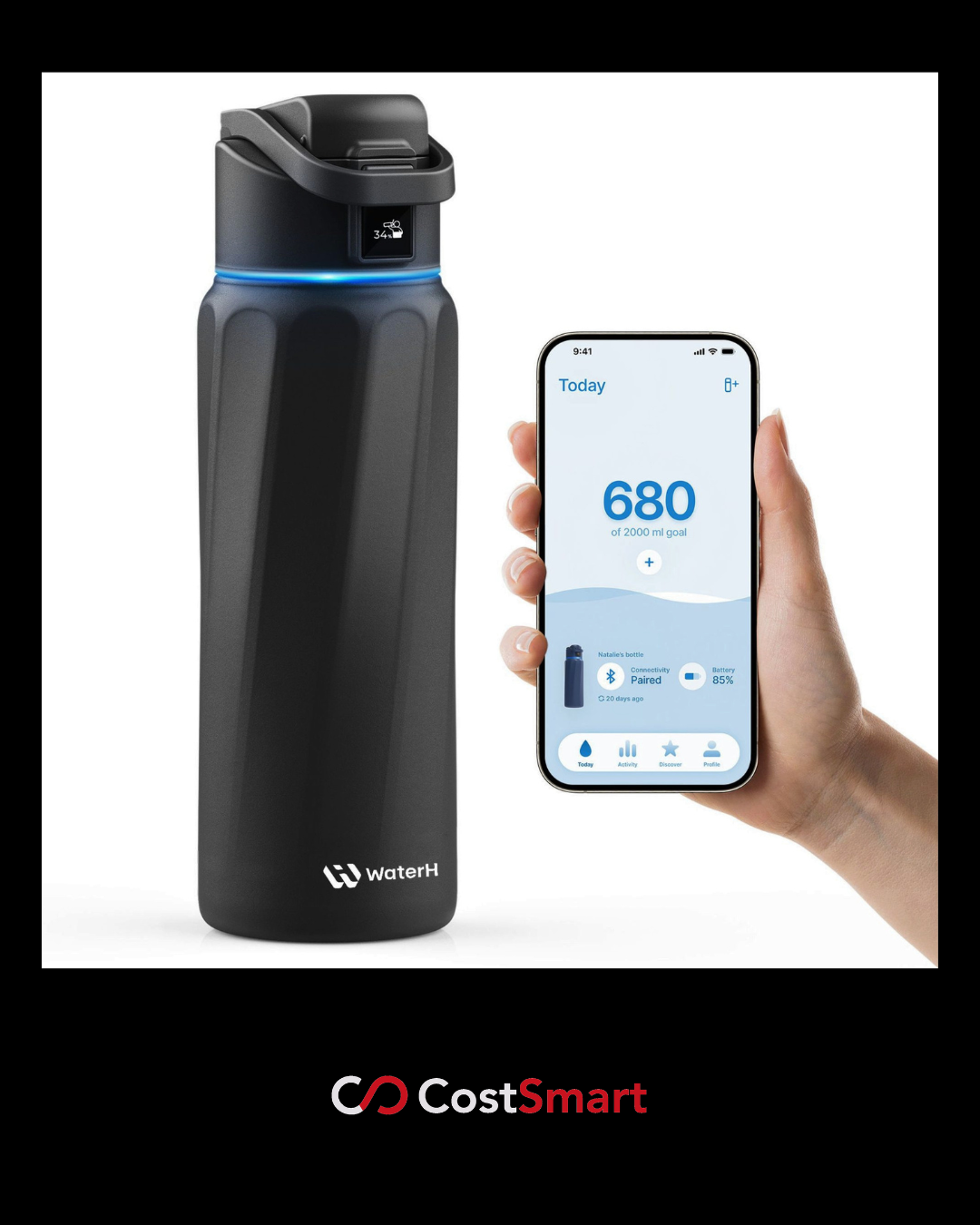
The WaterH Boost Smart Water Bottle has set a new standard in the wellness industry to solve this exact problem, earning an impressive 4.6-star rating from over 900 reviews online. This bottle is not merely a container for water; it is a precision-engineered wellness tool designed to integrate technology into the daily routine of the modern professional. 


: A matte black WaterH Boost Smart Water Bottle featuring a glowing blue 360-degree LED reminder ring and the WaterH logo at the base. To the right, a smartphone displays the WaterH tracking app showing hydration progress and battery levels. The image includes the CostSmart logo at the bottom, highlighting the bottle as a premium corporate wellness product.

Science-Backed Hydration Tracking 

The standout feature of the WaterH Boost is its automated tracking system. Unlike traditional “smart” bottles that require manual logging in an app, the Boost utilises advanced internal sensors to measure exactly how much water is consumed. 

  • Precision Sensors: The bottle accurately detects water levels and logs consumption in real-time. 
  • 360-Degree LED Glow: A signature light ring at the base provides a gentle, glowing reminder to drink. This is particularly useful during focused work blocks or long meetings, ensuring you meet your daily targets without needing to check your phone. 
  • Seamless Integration: It syncs via Bluetooth to the WaterH app, which is compatible with major health platforms like Apple Health and Fitbit for a comprehensive view of personal wellbeing. 


Premium Engineering and Design 

Beyond the technology, the hardware of the WaterH Boost is built for durability and temperature retention. It is designed to withstand the rigours of daily travel while maintaining a sophisticated, minimalist aesthetic. 

  • Triple-Wall Insulation: Crafted from high-grade stainless steel, the triple-wall vacuum insulation keeps beverages cold for up to 24 hours. 
  • IPX7 Waterproof Rating: The smart components are fully protected, meaning the bottle is easy to clean and safe for use in any environment.  
  • Safety First: The bottle is entirely BPA-free, ensuring that high-tech hydration remains healthy and chemical-free.  
  • Magnetic Charging: A convenient charging port ensures the internal battery remains powered for weeks of consistent tracking. 


Customisation and Colour Range 

To ensure this premium tool aligns perfectly with your corporate identity, the WaterH Boost is available in a professional colour palette with high-quality branding options. 

  • Colour Range: Available in black, blue, and off-white. 
  • Laser Engraving: A permanent and sophisticated finish (Up to 50mm H x 50mm W). 
  • Pad Printing: Perfect for vibrant, brand-accurate colours (Up to 40mm H x 45mm W per colour/position). 


A Versatile Solution for Professional Wellness 

The WaterH Boost serves as a tangible investment in health, making it an ideal choice for corporate wellness initiatives, executive gift kits, or high-tier employee onboarding. By providing a tool that actively monitors and encourages better habits, organisations can offer a product that provides genuine, long-term value to the recipient. 


Streamlined Sourcing and Logistics 

Trying to source and brand high-end technology can be a complex process. CostSmart acts as an extension of your team, taking the weight off your shoulders by managing the entire procurement process. 

We handle everything from sourcing the WaterH Boost to managing the logistics and delivery. This allows you to focus on the big picture while we make your wellness goals or corporate gifting projects a reality. 

Ready to bring smart hydration to your brand? 

Contact the CostSmart team today for a quote and let’s start planning your next project!


The Technology Powering Modern Document Storage 

Effective asset management requires more than just a place to keep boxes. While digital data is often the primary focus of corporate strategy, physical inventory remains a critical pillar of national business operations. From sensitive legal archives and medical records to high-value business contracts, these tangible assets require a level of oversight that traditional storage simply cannot provide. 

We bridge the gap between physical space and digital precision by providing a high-speed, intelligent records management platform for every asset you own. By moving beyond the “out of sight, out of mind” approach, we ensure your physical inventory is managed with the same real-time visibility as your digital files. 


A Smarter Interface for Modern Document Storage

The primary challenge with traditional offsite storage is the loss of control. When assets leave a facility, they often enter a black hole where tracking depends on manual spreadsheets and slow communication. This lack of transparency leads to ghost inventory, where organisations continue to pay for the storage of items that have long since passed their usefulness. 

We have optimised this process by utilising the TR-BarCode system. This is a faster, smarter client web interface designed to help small-to-medium enterprises streamline their warehouse management. It provides our partners with an easy way to search their entire system inventory, update records, and request delivery or pickup services with total autonomy. 


Real-Time Tracking through Hardware Integration 

To manage physical assets effectively in a fast-paced environment, the technology must facilitate immediate action. Our platform integrates professional hardware, including specialised scanners and PDAs, to enable real-time stock tracking. This integration benefits both our internal operations and your business by ensuring that every inventory count and picking task is accurate and instantly updated in the cloud. 

This digital-first strategy also includes specialised tools to ensure that physical distance does not hinder your operational speed: 

  • Scan on Demand: This service creates a hybrid workflow where a physical file can be requested and digitised within two hours. By providing rapid digital delivery, organisations maintain business continuity without the costs or delays of physical transport. 
  • Secure Chain of Custody: High-level compliance requires a verifiable history for every asset. Our platform tracks every movement within 24/7 monitored facilities, ensuring that sensitive documents are handled according to strict national security standards. 
  • Authorised Document Destruction: Managing the end of a document lifecycle is as vital as its beginning. Compliance-led disposal ensures that outdated records are destroyed securely, protecting the organisation from data breaches and reducing unnecessary storage footprints. 


Strategic Benefits of a Managed Ecosystem 

When storage technology is integrated into a broader business strategy, the benefits extend beyond simple organisation. High-quality data regarding physical stock allows for better risk management and national compliance control. 

For example, a legal department managing thousands of original deeds or sensitive litigation files can use the platform to maintain a flawless chain of custody. Instead of manually searching through boxes, the team can instantly identify the exact location of a specific contract and track its movement history. This level of precision is essential for meeting statutory retention requirements and ensuring that original documents are available for court or audit at a moment’s notice. 

Furthermore, moving to a managed model allows companies to re-organise their internal floor space. By shifting archives and bulky inventory to a specialised, tech-enabled facility, every square metre of expensive office real estate can be reclaimed for higher-value activities. 


Partnering for Smarter Storage 

At CostSmart, we pride ourselves on being more than just a service provider. We act as an extension of your team, providing the tools and expertise needed to bring your physical storage into the modern era. Our Doc Storage solution, powered by the eStore platform, is designed to give you total clarity and control over your assets. 

Whether you need to streamline your archives or implement a national distribution strategy for your corporate materials, we are here to help. 

Ready to see your inventory in a new light? Contact the CostSmart team today  

Custom eStores for Business: Autonomy Without Losing Budget Control

Decentralised purchasing is one of the biggest hidden drains on a marketing or operations budget. When sales reps, store managers, and new starters each procure their own uniforms, signage, or promotional kit through ad-hoc channels, the result is predictable: inconsistent branding, blown budgets, and a procurement team buried under one-off requests. The solution isn’t tighter control. It’s smarter control. 

A well-built custom eStore gives your people the freedom to order what they need, when they need it, while giving finance and marketing complete oversight of who is spending what, where, and on whose authority. 


The Real Cost of Uncontrolled Ordering 

Most businesses underestimate the true cost of fragmented procurement. It isn’t just the line item on the invoice. It’s the hours spent chasing approvals, the rush-order freight premiums, the off-brand merchandise that quietly erodes brand equity, and the rework when the wrong product lands at the wrong site. 

For a business ordering uniforms, workwear, signage, and marketing collateral across multiple sites, those inefficiencies compound quickly, often without ever appearing on a single report. 


What a Custom eStore Actually Solves 

A custom eStore is more than an online catalogue. It’s a controlled environment that mirrors the way your business actually operates. The right platform should deliver: 

  • Role-based access: Unique logins for every user, with visibility limited to the products and budgets relevant to their role. 
  • Cost centre allocation: Orders automatically attributed to the correct department, region, or project, eliminating manual reconciliation. 
  • Pre-approved product catalogues: Only on-brand, on-spec items are available to order, removing the risk of rogue purchases. 
  • Spend caps and approval workflows: Built-in thresholds that route larger orders to the right approver before they’re placed. 
  • Real-time reporting: Live dashboards that show consumption by site, team, or campaign, making forecasting and budgeting genuinely data-driven. 

The outcome is autonomy at the front line and accountability at the leadership level. Two things that rarely coexist in traditional procurement. 


A Practical Example: Field Teams and Multi-Site Operations 

Consider an organisation with a large field-based workforce, multiple sites, and regular campaign activity. One of our long-standing clients in the construction sector uses their custom eStore exactly this way. 

Their reps on the road can order uniforms, branded vehicle decals, and site collateral directly from their own login, drawing from their allocated cost centre. When a regional store runs a local campaign, the campaign manager accesses a tailored set of point-of-sale materials without needing to brief a central team. And when a new employee starts, their onboarding kit is ordered with a few clicks, fully branded, sized correctly, and dispatched to the correct site. 

What used to require dozens of emails, spreadsheet trackers, and back-and-forth approvals now happens in minutes. More importantly, every order is captured, costed, and reported against the right budget line. 


The Bigger Picture: Time Back, Costs Down 

When you remove friction from internal ordering, three things happen: 

  1. Procurement teams reclaim their time to focus on strategic sourcing rather than transactional order processing. 
  2. Marketing protects brand consistency because every item available to order has been pre-approved. 
  3. Finance gains visibility into indirect spend that has historically been the hardest to track. 

This is the operating model used by some of the most efficient national businesses in Australia, and it’s increasingly the expectation rather than the exception. 


Take Control Without Taking Over 

At CostSmart, we design and manage custom eStore solutions for busy marketing professionals and business leaders who need to give their teams autonomy without losing budget control. We source, store, manage, and deliver everything from uniforms and workwear to promotional materials and marketing print collateral, all through a platform built around the way your business runs. 

If your team is still managing branded merchandise and non-core procurement through emails, spreadsheets, and ad-hoc orders, there is a better way. 

Get in touch with the CostSmart team today for a tailored quote and discover how a custom eStore can give your business time back and costs down. 

The True Cost of a Lost Document & Why it is Draining Your Bottom Line

A single misplaced file may initially appear to be a minor administrative inconvenience. For most corporate entities, however, poorly structured information and records management is a quiet drain on profitability. When employees routinely spend valuable hours searching through disorganised physical archive boxes or scattered digital folders, operational efficiency plummets. The cumulative impact extends far beyond immediate staff frustration, directly affecting regulatory compliance, legal standing, and corporate reputation. 


The Hidden Drain on Corporate Productivity 

Industry research indicates that information workers spend a significant portion of their working week searching for internal documentation. When records are unindexed or archived without a strict logical framework, retrieving a legacy contract, asset manual, or historical invoice turns into an unpredictable scavenger hunt. 

The financial consequences of these inefficiencies can be categorised into direct operational liabilities: 

  • Wasted labour cost: Every hour spent tracking down a missing record represents capital diverted from profitable, revenue-generating activities. 
  • Opportunity costs: Delays in accessing critical intelligence can cause missed tender deadlines, stalled negotiations, or slowed client onboarding. 
  • Redundant recreation of data: When a vital document cannot be found after an extended search, staff are frequently forced to recreate the work from scratch, effectively paying twice for the same asset. 

Standard industry metrics show that misfiling a document costs an organisation a significant sum in lost productivity, while the cost to completely recreate a permanently lost document is drastically higher. This unnecessary expenditure occurs entirely because of a lack of systematic indexing at the point of storage. 


Regulatory Risks and Legal Exposures 

A lack of robust records management exposes an enterprise to severe compliance vulnerabilities. Australian regulatory bodies enforce strict guidelines regarding data retention, financial transparency, and consumer privacy. If an organisation is unable to produce required audit trails or compliance certifications during an official review, the consequences are immediate. 

Failure to maintain strict control over record inventories can result in specific legal and financial penalties: 

  • Statutory non-compliance fines: Regulatory authorities can levy heavy financial penalties on corporations that fail to produce mandatory operational or financial documentation upon request. 
  • Adverse litigation outcomes: In legal disputes, the inability to discover and produce evidence can compromise an organisation’s position, leading to avoidable out-of-court settlements or judicial sanctions. 
  • Breach of contract: Failing to adhere to agreed data-retention schedules or client confidentiality protocols can trigger severe contractual penalties and terminate valuable commercial relationships. 


The Strategic Alternative: Professional Indexing 

Transitioning from a reactive, unmanaged file storage method to structured professional records management eliminates these systemic vulnerabilities. Professional indexing involves categorising, barcoding, and logging records systematically before they enter a secure storage facility. This process transforms a passive warehouse of boxes into a highly responsive data repository. 

By establishing a professional corporate index, organisations secure clear logistical advantages: 

  • Instantaneous retrieval: Authorised personnel can locate and request specific files within moments, eliminating administrative delays. 
  • Comprehensive lifecycle management: Automated tracking ensures that files are securely retained for their mandated lifespan and destroyed safely when they reach expiry. 
  • Optimised real estate: Businesses can reclaim expensive commercial floor space by shifting physical records to a secure off-site centre, repurposing their primary office layout for higher-value activities. 


Securing Compliance and Efficiency 

The true cost of a lost document encompasses wasted labour hours, missed commercial opportunities, severe regulatory penalties, and compromised legal security. Relying on ad hoc storage methods is a high-risk approach that erodes profitability over time. 

Implementing a rigorous records management framework is an essential operational investment. By partnering with a dedicated corporate specialist, your business can protect its institutional knowledge, insulate itself from legal risks, and streamline its administrative workflows. 

CostSmart offers streamlined document storage and records management for efficient processing and access for our customers. This service allows companies to free up valuable on-site space while gaining more efficient access and greater control over their inventory. 

Protect your business from the costly risks of mismanaged documentation. Contact the team at CostSmart today to discuss your inventory requirements and to receive a comprehensive, tailored quote.

Document Storage and Record Management in the Construction Industry

Managing structural documentation has become a significant operational bottleneck for commercial builders and engineering firms. Modern construction projects generate substantial volumes of physical records, ranging from master blueprints and architectural drawings to safety audits and structural certifications. Given that statutory liability periods for major structural defects frequently extend to ten years or more, the secure preservation of these assets is a strict legal and financial necessity. 

The core administrative challenge lies in the physical format of these records. Unlike standard corporate files, engineering drawings require specialised handling to prevent deterioration, tearing, or moisture damage. When large-scale schematics, work health and safety registers, and project completion folders are stored inefficiently on-site, companies compromise both their operational agility and their regulatory compliance posture. 


Statutory Document Retention Guidelines for Construction 

To maintain compliance and mitigate long-term liability, construction firms must align their record retention policies with specific state and federal legislative requirements. The following timelines dictate the minimum periods for which key construction documents must be preserved: 

  • Building plans, structural certifications, and completion files: Retain for a minimum of ten years. Under state-based building acts, legal proceedings for defective building work are subject to an absolute ten year long-stop limitation period from the date of the occupancy permit or completion. 
  • Work health and safety records: Retain risk assessments, incident reports, and safety audits for at least five years. However, specific hazardous material records, such as asbestos registers and employee exposure records, must be retained for up to forty years under state Work Health and Safety Regulations. 
  • Employee and payroll records: Retain for seven years to comply with federal employment standards. This includes hours worked, superannuation contributions, and taxation details. 
  • Tax and general financial records: Retain for five to seven years. While the Australian Taxation Office requires a general five year retention period, federal company law mandates that corporate financial records be kept for seven years. 


The Risk Profile of Substandard Plan Retention 

Maintaining physical archives within active site offices or poorly managed company basements introduces several severe commercial risks. Structural degradation from humidity or improper folding can render historical blueprints illegible, creating immense vulnerability during future structural disputes or warranty claims. 

Regulatory scrutiny across the construction sector has intensified significantly. Government authorities and insurance underwriters now demand instant access to verified safety audits and completion files during inspections or litigation. Failing to produce unvarnished, historical project data during a compliance review can result in costly project delays, substantial financial penalties, and irreversible damage to corporate reputation. 


Spatial and Financial Inefficiencies of On-Site Archiving 

Devoting high-value commercial floor space to rows of plan racks and filing cabinets represents an inefficient use of corporate capital. Every square metre utilised for historical paper storage is space that could otherwise be allocated to operational staff, project planning teams, or technical machinery. 

Furthermore, the hidden labour costs associated with manual retrieval are substantial. Valuable project managers and administrative staff frequently spend hours searching through unindexed physical boxes to locate a specific schematic revision. This administrative friction reduces productivity and delays response times for active client enquiries. 


Best Practices for Oversized Records Management 

Mitigating these risks requires a structured framework for records management. Progressive construction firms are establishing systematic archiving protocols to categorise project infrastructure from day one. Implementing these core strategies ensures long-term protection and swift accessibility: 

  • Utilising climate-controlled, off-site repositories: Protect large-format paper documents from moisture, heat, and physical degradation. 
  • Establishing strict indexing systems: Catalogue files by project phase, asset type, and structural revision number to ensure swift digital retrieval. 
  • Restricting physical access to authorised personnel: Use audited chain-of-custody protocols to protect proprietary intellectual property. 
  • Separating active and archived folders: Cleanse active workspaces of completed project files to optimise daily administrative workflows. 


Streamlining Operations with CostSmart 

To eliminate the burden of physical archive management, construction enterprises require a trusted external partner. CostSmart offers streamlined document storage and records management tailored specifically for efficient processing and rapid access. Our specialised services allow companies to free up valuable on-site space while gaining more precise control and more efficient access to their entire historical inventory.

By moving physical blueprints, safety audits, and project completion files into our secure facilities, you safeguard your business against long-term liability risks. Our indexing methodology guarantees that historical files are easily accessible whenever a legal query or structural audit arises, eliminating administrative downtime entirely.

Contact the specialists at CostSmart today to request a comprehensive quote for your construction records management needs. 


Industry References and Legislative Frameworks 

  • Corporations Act 2001 (Cth): Section 286 mandates the retention of financial records for seven years.
  • Fair Work Act 2009 (Cth): Section 535 requires employee records to be preserved for seven years.
  • Income Tax Assessment Act 1936 (Cth): Section 262A requires transaction and tax records to be kept for five years.
  • Building Act 1993 (Vic) / Environmental Planning and Assessment Act 1979 (NSW): These state acts establish the ten year limitation bar for building actions, making the preservation of structural schematics vital.
  • Work Health and Safety Regulations: State-based legislation requiring extended retention of safety registries and hazard exposure data.


Please note: This is intended as a guide only. It is important to note that CostSmart, does not endorse the information in this article or offer professional advice. Before relying on the information within this article, healthcare professionals are strongly encouraged to seek independent professional advice tailored to their specific circumstances. For comprehensive information regarding document retention requirements, contact the regulatory body responsible for your industry and head to the references below for more detailed information.

Corporate Uniform Management Made Simple 

Managing corporate apparel involves more than simply selecting garments from a catalogue. For medium to large Australian enterprises, the true cost of a uniform programme resides within the hidden layers of supply chain administration. Procuring stock is straightforward. The friction arises when internal staff must coordinate individual fittings, track complex sizing spreadsheets, manage bulk storage, and manually pack orders. 

In-house apparel management rapidly absorbs valuable resources. To control expenditure and eliminate friction, organisations must treat uniform management as an integrated logistics process. 


The Operational Burden of Conventional Management 

Traditional procurement models often stop at delivery, leaving internal teams to manage the chaotic final rollout phase. This approach introduces several operational vulnerabilities: 

  • Sizing Inaccuracies: Relying on self-reported measurements results in high return rates and costly alterations. 
  • Storage Inefficiencies: Valuable commercial floor space becomes cluttered with boxes of excess seasonal stock. 
  • Labour-Intensive Rollouts: Internal staff spend hours sorting garments, matching them to employee profiles, and packing individual parcels. 
  • Fragmented Tracking: Without centralised visibility, tracking who received which item becomes impossible, leading to duplicate ordering. 

Every hour your team spends counting shirts represents a direct diversion from core business activity. 


Sourcing, Fittings, and Customised eStore Solutions 

To resolve supplier complexities, organisations must centralise the procurement process. This starts with brand alignment, where dedicated account managers assist with style guides and design concepts. Instead of managing a disjointed array of suppliers, all items are consolidated into a single stream. 

Professional fittings are organised directly at your operational locations, ensuring correct sizing from the start and removing the headache of returns. Once production is complete, we house all uniforms within a customised eStore. This secure portal gives your team 24/7 electronic visibility of live inventory levels and allows cost centre managers to order on demand. By treating corporate apparel with the same secure tracking, categorisation, and data-driven discipline, we can eliminate administrative chaos. 


Our C-Code Method and Circular Recycling 

Balancing volume discounts with budget limits is a major hurdle. Buying 1,000 units of a garment offers massive savings compared to buying 100 units, but upfront budgets limit purchasing power. 

Our unique C-Code service solves this: we execute bulk purchasing on your behalf to obtain volume discounts, store the stock, and make it available on your eStore. You draw down and pay only when goods are dispatched, protecting your cash flow. 

Furthermore, we support your sustainability goals through our circular laundry service. When team members leave, simply return their uniform items. We professionally clean, warehouse, and return them to your eStore for reuse. 


Pre-Pack Distribution 

Standard bulk distribution forces local managers to act as distribution clerks, sorting through boxes for their teams. 

The alternative is our individual pre-pack service. Under this structured model, each employee’s complete allocation, including apparel and specific PPE, is picked, consolidated, and packed into a single, personalised kit at our central facility. 

These individual packs are labelled clearly with the employee’s name and location. When the shipment arrives at a regional site, the local manager simply hands the sealed pack to the staff member. This eliminates administrative labour at the site level, ensures absolute accuracy, and guarantees a professional onboarding experience. 


Partnering for Supply Chain Efficiency 

Optimising your corporate apparel programme does not require your internal team to become logistics experts. The most cost-effective strategy is to embed a specialist partner directly into your operational framework as an extension of your team. 

At CostSmart, we specialise in identifying hidden costs and creating absolute efficiency across your entire supply chain. Whether we are managing your high-security archive documents or tracking your corporate apparel inventory, we bring the same level of precision, care, and savings to your operations. 

We can help you benchmark your current uniform framework through a complimentary cost analysis. Contact the CostSmart team today to book your analysis. 

How to Assemble a A4 Archive Box: A Step-by-Step Guide 

Need to get your office files organised but staring blankly at a flat piece of cardboard? Do not worry, putting together your CostSmart A4 Archive Box is quick and easy. Our archive boxes are built to last, offering superior quality and durability to keep your important documents completely secure. 

Follow these 5 simple steps to go from flatpack to a sturdy, premium storage solution. You can also follow along with our video guide to see these steps in action. 


Step 1: Lay it Flat and Prep the Base 

  • Start by laying the box flat on a clean surface, ensuring the box lid is furthest away from you.
  • Fold the centre flaps upwards.
  • Fold the sides inward.


Step 2: Stand the Box Up 

  • Take the upper half of the box and fold it inward towards you.
  • Bring it all the way up so that the box body is now standing upright.


Step 3: Secure the Front Face 

  • Fold the two smaller side flaps inward toward the centre of the box.
  • Push the front face in to enclose them.


Step 4: Lock the Base Supports 

  • Fold in the side flap internal supports to create that superior quality, reinforced double wall.
  • Insert the tabs into the slots at the base of the box to lock everything firmly into place.


Step 5: Fold and Close the Lid 

  • Fold the long lid flaps inward, then fold the top of the lid downward to create a clean right angle.
  • Fold the front of the lid down over the front flap and secure it into the groove.
  • Shut the lid and you are all done!


Give yourself a high five. Your archive box is completely assembled, exceptionally strong, and ready to organise!

Beyond the Price Tag: A Guide to Supply Chain Cost Reduction

The most expensive items in a supply chain are often the ones that never appear on an invoice. While procurement teams are trained to negotiate the lowest possible unit price for branded merchandise, workwear, or marketing collateral, the sticker price represents only a fraction of the total economic impact on your business.

True cost analysis requires looking beneath the surface of a transaction to identify profit leakage: the systemic inefficiencies that erode margins and consume internal resources. Understanding these hidden variables is the first step toward achieving genuine supply chain cost reduction and ensuring procurement functions as a value-driven asset rather than just an unavoidable expense.


The High Cost of Procurement Friction

Internal labour costs associated with managing a fragmented supply chain are frequently overlooked. When staff members spend significant portions of their week sourcing multiple quotes, chasing production timelines, and managing quality control for non-core products, the business is effectively paying a premium for administrative friction.

This friction represents a major source of leakage because it diverts expertise away from high-value strategic tasks. Consolidating these touchpoints into a managed stream is a fundamental component of supply chain cost reduction. By centralising the sourcing and management of equipment and promotional materials, an organisation can eliminate the miscommunication and fragmentation that lead to expensive, preventable errors.


Inventory Obsolescence and Dead Capital

Storage and inventory management are two of the most underestimated variables in supply chain logic. It is a common pitfall for businesses to over-order to achieve a perceived price break, only to have that stock sit in a warehouse collecting dust.

This is dead capital. When uniforms go out of style or marketing collateral becomes outdated, the initial saving is completely negated by the cost of disposal and ongoing storage fees. Smart management involves data-driven stock control. By monitoring usage patterns and implementing just-in-time principles, a business ensures that its capital remains liquid and its physical storage footprint remains lean, contributing to long-term supply chain cost reduction.


The Freight and Logistics Trap

Shipping and delivery are areas where cost leakage is often transparent yet least controlled. Inefficient routing, urgent last-minute courier fees, and a lack of consolidated shipments can inflate total expenditure by 15% to 20% without warning. Without a bird’s-eye view of logistics, these small, recurring charges often go unnoticed during monthly reconciliations.

A professional logistics strategy focuses on consolidation. By managing the storage and delivery of goods through a unified system, organisations can optimise routes and significantly reduce the frequency of high-cost, small-batch deliveries. This level of oversight is essential for any business serious about supply chain cost reduction.


Brand Dilution and Quality Control Failures

While not always a line item on a balance sheet, the cost of brand inconsistency is substantial. When different departments source their own workwear or promotional items from unvetted suppliers, brand standards invariably slip.

Inferior quality leads to shorter product lifespans, which requires more frequent replacements and potentially damages professional reputation. Implementing a managed supply chain ensures that every item meets a singular quality benchmark. This consistency protects brand equity and ensures that the items the business invests in are durable and fit for purpose.


Achieving Efficiency with CostSmart

Effective supply chain cost reduction requires moving beyond a transactional mindset and adopting a holistic view of the procurement life cycle. By identifying where time and resources are being wasted, you can transform your non-core procurement into a streamlined, value-adding component of your business.

At CostSmart, we view ourselves as an extension of your team. Our goal is to help you win back time while ensuring your budget is utilised with maximum precision. We handle the sourcing, storage, and delivery of your branded merchandise, uniforms, and marketing collateral so you can focus on your core objectives.


Ready to Optimise Your Supply Chain?

Stop losing time and money to hidden inefficiencies. Let CostSmart act as your strategic partner in sourcing, managing, and delivering your business collateral.

CostSmart offers a free Cost Analysis service, providing you with industry benchmark comparisons. At best, we can find you a more cost-effective and efficient solution, at worst you will know that you are receiving market competitive rates and feel confident your current suppliers are delivering the best outcome – it’s a win whichever way.